Self-Advocacy

All four mural images displayed at the Allez! alleyway mural space

How can I fight this or prevent this?

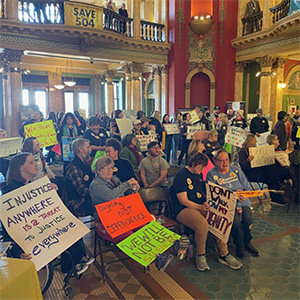
Self-advocacy is the ability to speak and act on behalf of oneself or a cause, which involves understanding your needs, communicating them clearly, and making your own decisions and choices. Advocacy can be an action taken to influence and create individual, social, and global change or to educate peers and the public at large with self-awareness of what you want and need and how to communicate it effectively. 

At Summit, we offer self-advocacy assistance in navigating government programs; understanding and securing civil rights under disability laws; and a wide range of other situations requiring support and problem solving assistance in order to build and maintain self-empowerment, and live independently.

In a country where we have to fight for our civil rights, self-advocacy is a necessary skill for independent living. We have rights must use our voices to ensure representation, develop confidence, and empower our peers. Effective communication allows us to tell others what we need to access our communities. Being a self-advocate means speaking up for yourself and defending your rights. Self-advocacy can be any of the following:

  • Assessing your needs
  • Asking for what you need
  • Assertive communication
  • Fighting for individual accommodations
  • Building self-esteem
  • Developing strong relationships
  • Understanding your rights and responsibilities

For advocacy assistance or more information, please contact your local Summit office.

Summit offers assistance in identifying and applying for Social Security, Medicaid/Medicare, SNAP, low-income heating and energy assistance, and many other benefits you may need. We can also assist you in understanding your benefits so that you understand your responsibilities or how they may be affected if your income changes or you return to work.

Housing is an integral part of our lives. The neighborhood and community that we live in influences the availability of medical services, school and work opportunities, shopping, transportation, cultural events, and religious, recreational, and community activities. Having a home is a universal human need. Without a place to call home, people with disabilities have trouble recovering or maintaining their health, becoming self-sufficient, and reclaiming valued roles in their families and communities.

Community integration for people with disabilities is not just a concept or an idea or a goal or a theory – it is the law! Although Summit does not own or operate housing, we do offer housing assistance in a coordinated fashion with other IL services, maximizing individual chances for success in the community. The principles and practices of our housing approach are consistent with IL philosophy. This includes the belief that people with disabilities should have the same rights and opportunities as other people to choose, get, and live in integrated housing; to receive, direct, or refuse their own support services; and to direct their own lives, without unnecessary or unwanted interference.

Summit can support you to identify what kind of housing you need and want, provide you with housing resources, fill out applications, learn how to request accommodations, obtain support services, and know your rights.

People with disabilities who live in nursing homes miss out on many opportunities. Transitioning out of a nursing home often means gaining the freedom, privacy, and control to make daily decisions, to choose when to get up, when and what to eat, what to do, where to work or volunteer, where to shop, who to visit, which doctor to see, and much more. Summit strives to assist individuals with disabilities to transition out of nursing homes in order to live their lives in their own way.

Nursing Home Transition: for individuals who currently reside in a nursing home or other institutional setting and who wish to move out into the community

Nursing Home Diversion: for people in danger of moving into an institutional setting to ensure that they can remain living as independently as possible in the community

Check Out Our Other Programs

NOT SURE WHERE TO START?

Contact us to find out which programs will best meet your goals.

Follow Us on Instagram