
Since 1981 Summit has grown from a small, grassroots effort into an active and highly respected community organization.
Summit Independent Living was founded in Missoula in 1981 as part of the national Independent Living movement, which believes that people with disabilities should have the same rights, choices, and opportunities as everyone else. What began as a small, grassroots program grew out of a federal Centers for Independent Living grant and was originally housed in a modest duplex, serving the Missoula community through advocacy, skills training, and peer support.
Throughout the 1980s, Summit expanded its reach and mission. It embraced a cross-disability approach, serving people with a wide range of disabilities, and extended services into surrounding rural counties. In 1988, Summit became an independent nonprofit organization governed by a consumer-controlled board, firmly grounding its work in the voices and leadership of people with disabilities themselves.
As one of western Montana’s first Centers for Independent Living, Summit helped bring disability rights into rural communities, where access and services had long lagged behind urban areas. Its early adoption of a cross disability philosophy, peer advocacy, and systems level advocacy aligned Summit with statewide efforts to advance civil rights protections culminating in the passage of the Americans with Disabilities Act in 1990.
During the 1990s and beyond, Summit played a key role in advancing Montana’s disability rights efforts and translating those rights into everyday independence—helping lead Montana shift toward self directed personal assistance services, community based living, and youth leadership development to support the next generation of self-advocates.
Today, Summit Independent Living Center continues to serve Western Montana, advancing independence and civil rights through advocacy, peer support, and inclusive community services, working to ensure that people with disabilities in Montana can live, work, and participate fully in their communities, guided by the principle of Nothing About Us Without Us, remaining true to the values it was founded on.
History of the Independent Living Movement
The Independent Living Movement began in the United States in the late 1960s and 1970s as people with disabilities challenged medical and institutional models that limited their freedom and choice. Inspired by broader civil rights movements, disabled activists argued that disability is not something to be “fixed,” but a natural part of human diversity—and that barriers in society, not individual impairments, are what restrict participation. The movement emphasized self determination, personal autonomy, and the right to live in the community rather than institutions.
A key outcome of the movement was the creation of Centers for Independent Living (CILs), community-based organizations led by people with disabilities that provide peer support, advocacy, and independent living skills. CILs helped shape major disability rights advances, including nationwide accessibility standards and community based services. Today, the Independent Living Movement continues to influence disability policy and culture, centering the idea that people with disabilities should control their own lives and have equal access to all aspects of society.
In Montana, the Independent Living Movement took shape as people with disabilities began organizing to overcome the added barriers of long distances, limited services, and rural isolation. While the movement gained national momentum in the 1970s, it was in the 1980s that Montanans with disabilities began building community based alternatives to institutional care, advocating for access, dignity, and the right to remain in their home communities. These efforts reflected the movement’s core belief that independence is defined by choice and control, not by geography or disability.
Centers for Independent Living across the State played a critical role in translating national disability rights ideals into practical change for Montana communities. By emphasizing peer support, cross disability inclusion, and consumer leadership, Montana’s CILs helped expand access to education, employment, housing, and HCBS services. Today, the Independent Living Movement continues to shape disability advocacy in Montana, ensuring that people with disabilities, especially in rural areas, have a strong voice in the policies and systems that affect their daily lives.
Service Area
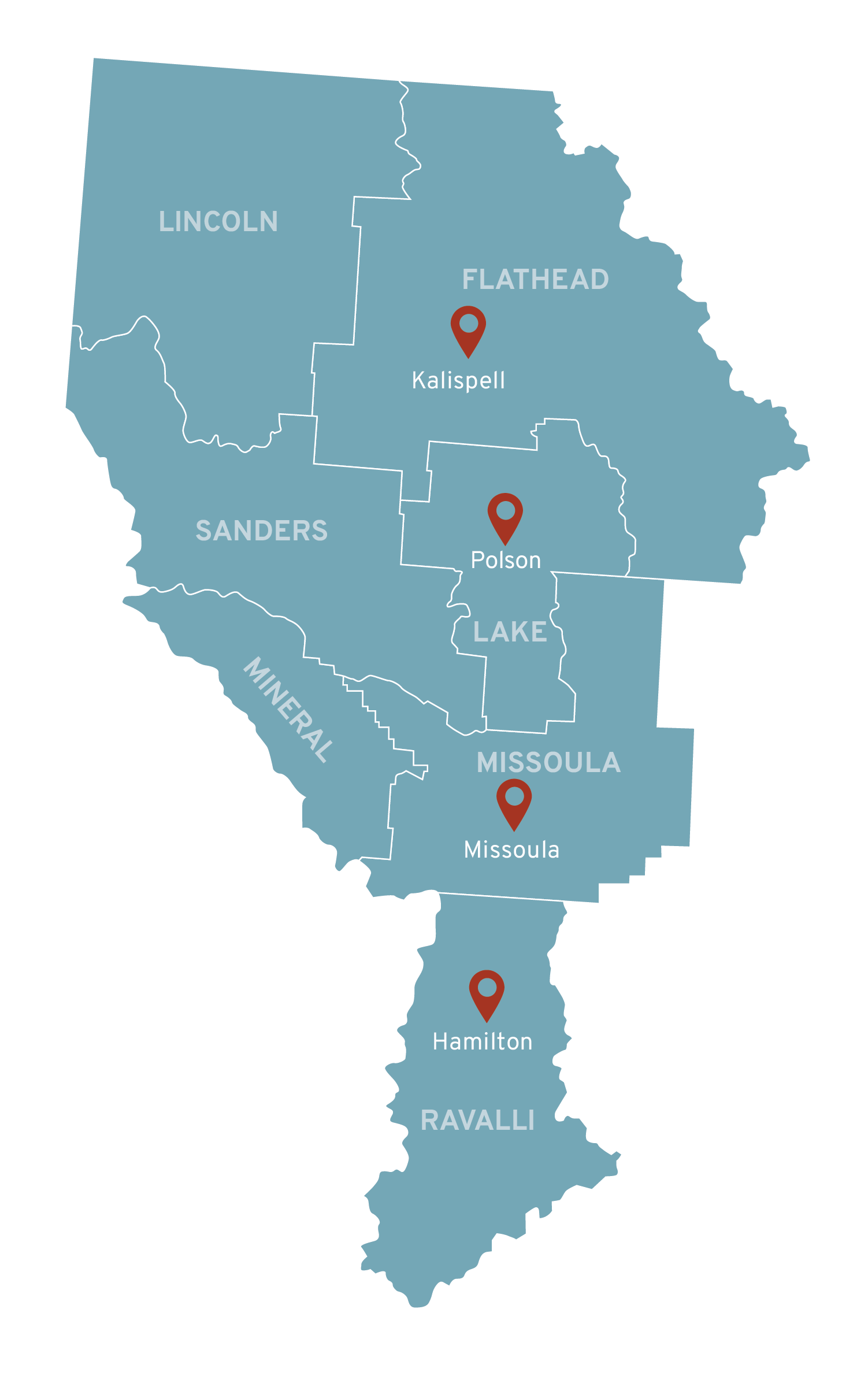
Summit is headquartered in Missoula with branch offices in Hamilton, Polson and Kalispell.
Services are available to residents of Missoula, Ravalli, Mineral, Lake, Sanders, Flathead and Lincoln Counties in western Montana.
Service Eligibility
Individuals of all ages, with all types of disabilities, are eligible for Summit services.
Information and referral services are available to anyone, regardless of location or disability status, including friends and family, the business community, governmental agencies, and the general public.
Follow Us on Instagram


